Who Trains the People Who Train Others?
LinkedIn training for educators – professional visibility, networking, and knowledge sharing in the university environment.
A good educator does more than share knowledge.
They keep people engaged, motivate, ask questions, give feedback, handle different situations, and connect with people from very different backgrounds.
Perhaps this is one of the strongest things education and the corporate world have in common.
Whether we’re in a classroom or a meeting room, many of the same skills matter: how we communicate, how we motivate others, how we give feedback, how we work with different personalities, and how we make sure our message truly gets across.
We may be educators, leaders, salespeople, or trainers. The essential thing is the same: we work with people.
LinkedIn Training at Óbuda University
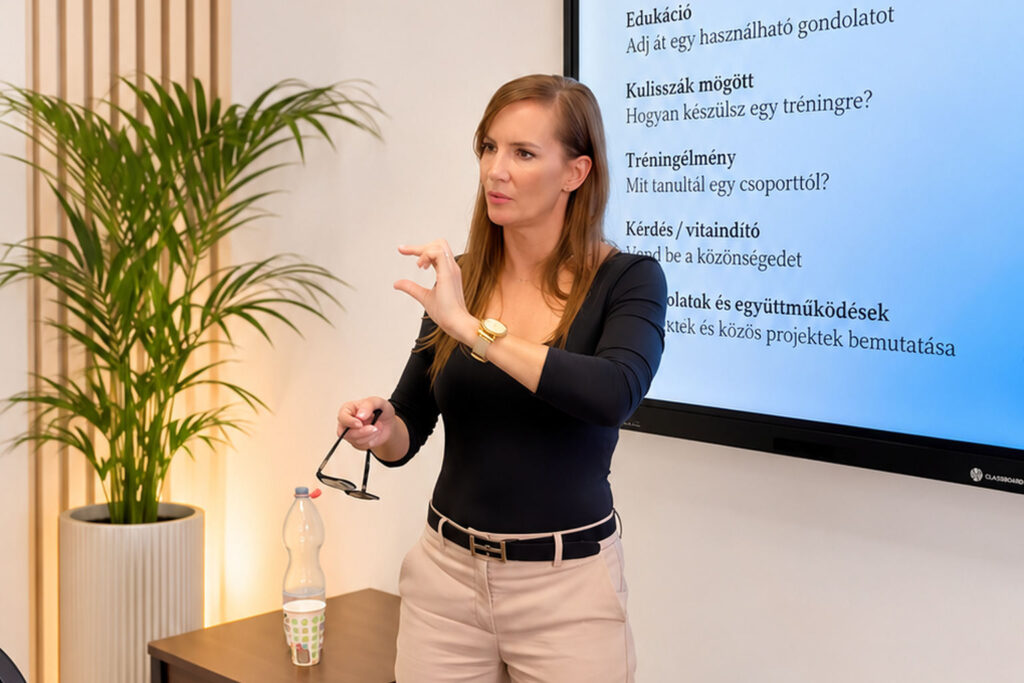
I have an ongoing professional collaboration with the Bánki Wellbeing Centre at Óbuda University, where I also deliver LinkedIn training programmes.
After years of corporate training and experience in multinational environments, I particularly value the opportunity to work in a university setting, not only with students but also with educators.
Naturally, LinkedIn is at the centre of my training.
During these sessions, I demonstrate that LinkedIn is much more than an online CV or a platform used for job hunting.
For educators and other university professionals, it also offers opportunities to make their expertise more visible, share professional achievements, and build valuable relationships.
Why Can LinkedIn Be Valuable for Educators?
Universities are full of valuable knowledge, research findings, and professional experience.
But how much of that actually reaches the people who could benefit from it?
LinkedIn can help educators become more visible beyond their immediate professional environment, reaching other institutions, companies, and professional communities.
They can show what they work on, which questions they explore, what they have achieved, and what kinds of collaboration they are open to.
They can connect with other educators, researchers, and industry professionals. They can share insights related to their field and discover professional events, research, or opportunities they might otherwise miss.
But simply creating a LinkedIn account isn’t enough.
It’s worth thinking strategically about how we present our professional work, who we want to reach, and what kinds of relationships we want to build.
Professional Knowledge Has Greater Impact When It Reaches Others
One of the most important questions in my LinkedIn training programmes is how participants can communicate their existing expertise clearly and authentically.
Educators and researchers don’t necessarily need to post regularly to use LinkedIn more strategically.
Even having a professional profile that clearly explains what they do, where their expertise lies, and what kinds of collaboration they’re open to can make a meaningful difference.
That’s why we work with practical examples directly related to participants’ own professional activities.
For me, professional visibility is not an end in itself.
It can create opportunities for knowledge to reach new people and for relationships to develop that might otherwise never have existed.
Because knowledge is incredibly valuable. But how many people it reaches also matters.
As a Trainer, I’m Constantly Learning Too
Training educators is a little like cooking for chefs. 😄
After all, I have the opportunity to work with people who spend their days sharing knowledge, asking questions, explaining concepts, and helping others develop.
That’s why it’s important to me that these sessions aren’t just generic LinkedIn presentations. Instead, we work with examples and practical exercises connected to participants’ own professional lives.
My collaboration with Óbuda University is particularly valuable to me because, while I share my own knowledge and experience, I also gain new perspectives.
Working with professionals from different fields is always a learning experience. A question, a personal experience, or a different approach can spark new ideas for me as well.
That’s one of the reasons I enjoy being a trainer so much.
LinkedIn Isn’t Just for Salespeople
Many people still use LinkedIn primarily for job hunting or sharing company news.
But professional networking, knowledge sharing, and personal branding can be valuable in many other fields too.
For educators, researchers, leaders, entrepreneurs, and sales professionals alike.
Their goals may differ, but the starting point is often the same: how can we clearly communicate what we do, what we know, and what value we can offer others?
Because whether we teach, lead, or sell, ultimately, we work with people.
Nóra Váradi – LinkedIn and Social Selling Trainer and Consultant
Related service: LinkedIn Training for Companies